An Interview with Richard Wells
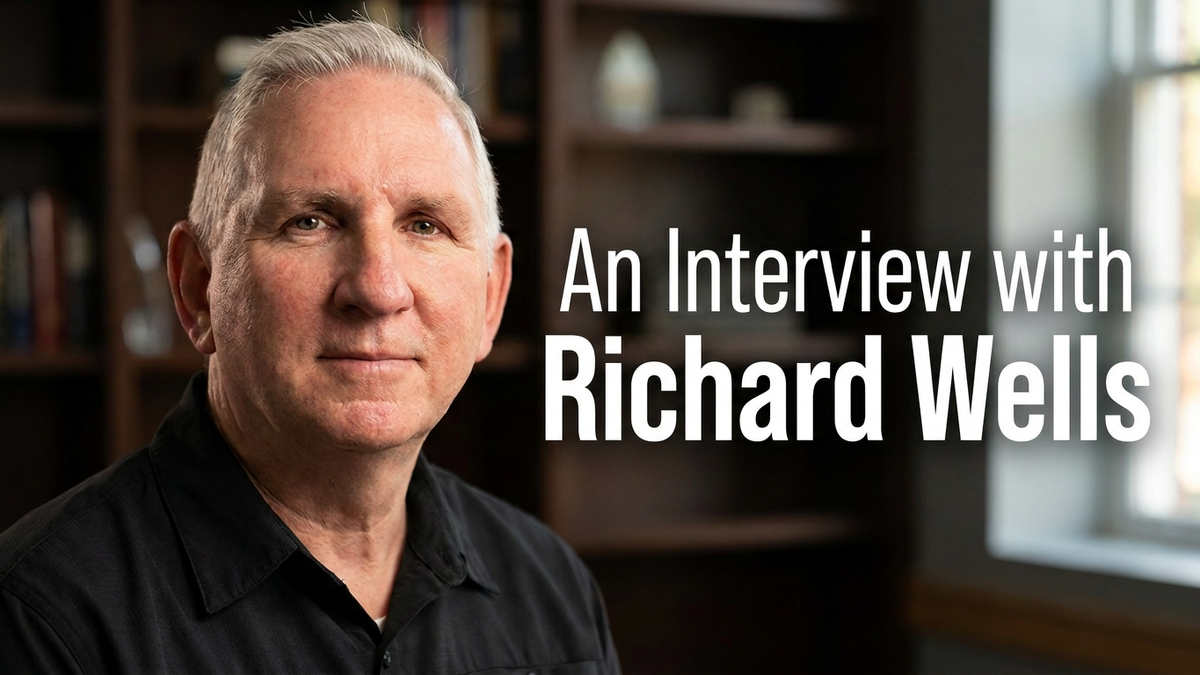
I interviewed Richard Wells, who ended his third term on the Select Board earlier this year. We discussed his time in Milton, his career, his time on the Select Board, and how he sees life as a state representative. The video is a below, and an AI-generated transcript follows.
Editor's Note: Pardon the production quality. As the site grows, I hope to improve the quality of the interviews. Thanks to Richard both for his time and for his patience.
Recorded Sunday, June 7, 2026, in the community training room of the original Milton fire headquarters behind Town Hall on Canton Avenue. Lightly edited for readability; meaning unchanged. Names marked [?] could not be verified against the recording.
Q: Hi everyone — we're here with Richard Wells. It's a nice Sunday afternoon on June 7th. Good to see you, and thanks for being here.
Wells: Thank you for having me.
Q: So tell me where we are before we get started.
Wells: We're currently in the original fire headquarters, located behind Town Hall on Canton Avenue, which has now been converted. We're actually in the apparatus bay for the engine and Car 8 — the ladder truck would have been on the other side here. This has been converted into a community training room, which was included as part of the fire station project and the building of the new headquarters. That was the first project undertaken in this multi-year effort.
Q: I think it's great to have this space. I didn't realize it existed until — I came to the Select Board and thought, I couldn't even find the space. But that's just because there's such a dearth of public space in this town. It's great to have this additional spot. And plus, I get to interview you.
Wells: I'll send you the bill.
Q: So, Richard, let's start by giving the audience a little background. Probably everybody in Milton knows something about you, because you've been in the public eye for such a long time. But for those few who don't — tell us a little about your background. How you came to Milton, how long you've been here, your family, a little about you.
Wells: My dad — we moved here when I was seven years old, I think, to East Milton. We rented an apartment there. My dad was a police officer here; he joined the Milton police in either 1949 or 1950, from Dorchester. He was one of five brothers who were in World War II together. He'd actually never been in Milton. My grandparents' house was just into Dorchester, in St. Gregory's Parish. He always told me that one of the first times he ever walked across the Central Avenue bridge was to go into the old police station at 36 Central Avenue, in the Central Avenue business district —
Q: Which was made up of Pretty's [?], Baker's Chocolate, Henry's Ice Cream —
Wells: Yeah. And our police station happened to be there. And he was there to sign the card to take the job.
I was the oldest of five boys. I think I knew as a young kid that public service somehow attracted me. I wanted to be a police officer. I took a very hard road to get here. I became — in 1983 I was a police officer at Harvard University first. I came here in 1984. I was the first sibling-son of a Milton police officer to serve, and we actually served at the same time. My dad was chief.
Q: Oh, no kidding.
Wells: He became chief in '87.
Q: Did you like that — serving at the same time?
Wells: No. [laughter] When I came on, before he was chief — and then when he was chief, I think I was secretary of the police union. We only had one union then. And sometimes that didn't go so well.
My father was much different than me. He's truly from that greatest generation. He never had the benefit of going to school — he went to war. He went to the Pacific right out of high school, out of Dorchester [?] High School, and then went to schools while he was a cop, which I did the same thing. He was a very quiet man. He hated public speaking, but people loved him. And I knew from the time I came on the job that I had big shoes to fill, because I had his name — I'm Junior, Richard Jr. So as I'd meet people as a young cop, people would say, "Oh, we know who you are." It was a big shadow, and trying to get out of it — it's a shadow I probably still feel like I'm in today. From heaven, he's probably laughing at me a little bit, because I can't imagine where I'm at. He probably gets a big chuckle out of that.
Q: And you have kids yourself?
Wells: Two daughters. I have an older daughter, Erin [?], who's a Quincy police officer. She was in her second year of college when 9/11 happened. And she quit, and said, "I'm going to the Marine Corps." And I said, "Yeah, right" — I'd taken her to buy comics two years ago, she rode horses her whole life. And she served. She's a combat veteran, and she's been a Quincy police officer for 17 years.
My youngest daughter, Molly — different marriages — my wife Pauline, married I think 29 years. Molly just graduated from Syracuse three weeks ago.
Q: Congratulations. Just had a graduation.
Wells: That's right. Thanks. It's great.
Q: Not like that — no more bills.
Wells: No more bills. I think we're living different lives. [laughter] So — my wife Pauline. We met 30-something years ago. I'd been divorced for a while, and I never thought I would date a cop, no less marry a cop. She was a Cambridge patrol officer. We married in 1988 — 1998, I'm sorry. She'd never been to Milton, or — she grew up in North Cambridge. Second date, I took her to Castle Island. She said, "What's this place?" So we moved here. She grew up in a three-family in North Cambridge. She wanted to buy a multifamily house, and we did — we bought a two-family on Reed Road, and we owned that for 21 years.
In many ways I refer to myself today as Mr. Pauline Wells, because she's had quite a tremendous career in Cambridge, and she is now currently the police commissioner of the city of Cambridge.
Q: Oh, I didn't know that.
Wells: Which just happened. Two months ago.
Q: Congratulations to her. That's amazing.
Wells: Big job. We hardly see her — we're like two passing ships. But she's my best friend in the world, and I really couldn't do this without her. We do this together. It's a pretty cool thing.
Q: That's great. [adjusting framing] I'm going to have you come into the frame a little bit. Sorry — no, you're fine. You don't have to lean forward. I'll cut this part out maybe, I don't know, we'll find out. [laughter]
Wells: Don't worry about it.
Q: Actually, really quickly, before I ask you a couple other things — you said you started as a police officer at Harvard. What was that like?
Wells: So it was 1983. A little bit of history — here's a difference between policing in the '70s and '80s and policing today, and not just policing, so many occupations in the 21st century. It was extremely difficult to get a police job then. The competition — let's say the civil service exam, maybe 50,000 people would take both police and fire statewide, where now you might get five if you're lucky.
I just wasn't lucky enough. I was an EMT. I'd gone to medical school [?]. I worked at Fallon here in Milton. I'd been there a few years, so I kind of knew I was liking public service. And someone told me — I can't remember who — that Harvard University gave its own police test. I'll never forget, it was at Harvard Law School. I signed up, took it on a Saturday. 780 people took that test.
Q: Wow.
Wells: Five jobs. And I scored high enough, and I was lucky enough to get one of the five. So that's where I went to the police academy from. I was only there about — just under a year, maybe right around a year — when I got the call to come on. My name came up on the Milton list, and I actually wasn't going to leave. I really liked the job at Harvard.
Harvard was unique — anything that happened in the world, there was a reaction to it there. I remember I was only there maybe a month one night, and we — I wouldn't say we invaded Grenada, but whatever happened with Grenada — within an hour there were 5,000 protesters in the Yard. You just don't see that. I got details — '84 was a presidential election, it was Mondale and, I think, Bush 41 maybe. There were debates at the JFK [School], so you got to see a lot of things.
I was assigned predominantly to the medical school in Roxbury, which in those days was a significant job. Street crime was huge — street robberies, people getting robbed. We had walking posts till 2:30 in the morning, because there was a big focus on the medical students. We abutted right next to what was the Mission projects then — a really tough area, on Street [?] / McGreevey Way. Every street crime was a different thing in the city then. I can remember even when I came here in '84, the trolley system that everybody rides today — you don't even, myself included, really think about personal crimes on that train. It was a big issue for many years. We used to have special walking posts in the Central Avenue business district, cops up and down those trains.
One night — the famous staircase that got torn out — it was a young nurse, and they robbed and stabbed her [?] on the stairway. I was the second one to get to her. I didn't think she was going to live. And it's funny — I was there today. I went to inspect the new [staircase] they're putting in, and I hadn't thought of that in 30 years, and it came into my head today.
So Harvard was a unique thing. I'll cherish it. I made relationships there that I still have today.
Q: Now I'm thinking about your time from there to serving here — you were police chief, and now you've been an elected official for some time. Can you tell me about that arc, up until the point you decided to run for Select Board?
Wells: Long and the short — I came on this job, I really had no ambition for anything. The biggest thing was to go to school. I'd gone to Quincy College, so I enrolled quickly in a bachelor's program, probably my second year. Curry wasn't even in the criminal-justice business in those days. The closest school you could go to — you could either go to Northeastern nights, or there was a college from Springfield, Western New England College. They ran out of the Cambridge Police Academy, which was in Central Square on the fourth floor, and they ran a bachelor's program. They had about 15 going at a time when I jumped in.
The good thing was, because there was so much violent crime on the T, Bill Bratton [?] — the infamous Bill Bratton — had become chief of the MBTA police, and he sent a message to all the chiefs. Because he knew so many cops were going to school: ride the trains, you don't have to pay, just show your credentials, ride armed, go in plainclothes. So for four years I rode back and forth — a whole ton of us rode back and forth to Central Square. I got out, went to school, came back. That's how I got my bachelor's.
By that time I'd realized the importance of having a college education, because society is complex — it's not what it was in my father's day, the cop on the beat. There were so many issues that still exist today. Domestic violence — in the 1980s, if you went to a domestic, you'd probably say to the husband, "Okay, go walk around the block, cool off, maybe sit down with the wife," and try to calm things —
Q: I can't imagine that response, right?
Wells: Absolutely not. So that's just one issue where you saw the complexity. Mental health issues. Heroin, which was pretty much eradicated — the drugs my first 10 years on the job, the two we dealt with the most were cocaine and pills, script pills, Xanax, Black Beauties, things like that. Fentanyl and heroin had been eradicated. It came back because of oxycodone — that whole oxycodone thing spawned the whole heroin, now fentanyl, today.
Once I got my bachelor's, I thought of going to law school. Two of the other officers here did. But I applied to the Kennedy School —
Q: Oh, okay. Public policy.
Wells: Public policy. But you had to take a year off, and I couldn't get that here. If you were Boston, Cambridge, State Police, NYPD, you could get the year. I couldn't. So I applied to BU and got my master's degree there. Once I got out, I went to Chief Mearn [?] at the time — by then I was teaching quite a bit at the police academy. Details just never did it for me; I couldn't stand them. So I was fortunate to get a teaching role. I got an adjunct professor role while I was in graduate school at UMass.
Then I got the opportunity to apply to the FBI Academy. I applied, and in 1998 I was selected. I went and lived there for three months. At the FBI Academy, about 1% of all law enforcement in the world gets to go. There are about 350 in a session — a lot of PT, but heavy academics. The University of Virginia runs all the academics. You had to carry six courses — four undergrad and two graduate.
In each class, all 50 states will be represented. Most of the military will have provosts and things like that. Then you'll have about 50 from the NATO countries — I had a colonel from Kuwait, a guy from France, a woman who's a superintendent from Adelaide, Australia, who I'm still friends with today.
Q: And you're doing this concurrently while still active?
Wells: Oh yeah, the work gives you the leave. It's a privilege to be selected. My wife's a graduate; Chief King — I nominated Chief King. I was president of my class, which I couldn't believe, because I remember getting there and thinking, how the hell did I get here? And then I wound up becoming president of the class, which was a huge honor, because you present when you graduate. There are about 4,000 people at graduation, and only two presenters — the director of the FBI and the president. I actually got to present twice, because we were visited by Janet Reno, who was attorney general, so I got to do a presentation before her as well. My gift of gab, as you're seeing right now, was kind of growing as I went in my career. It was a huge honor, and I'm still humbled that I was able to do it.
Q: It sounds like you enjoyed it.
Wells: I did. I still have friends today.
Q: So from there — and we could spend all day talking about your —
Wells: People want me to write a book.
Q: You should write a book.
Wells: I don't know.
Q: Oh, this interview should do it.
Wells: Yeah — let's go. You want to be the publisher? [laughter] So then — I was a lieutenant when I went. My deputy chief, in 1999, both Paul Giorgio and I — we hadn't had deputy chiefs in years, and the two of us made deputy chief under Chief Marron [?]. Then in 2007 I became chief, and I served till 2017, I think. When I left, it was a little controversial — but that's a bridge I don't even think about anymore. The suggestion was put in my head to run for Select Board.
Q: Now, let's talk about that. The suggestion was put in your head — somebody put it there. Did you think of it?
Wells: Truthfully, to this day, I probably wouldn't have been chief without three people who were my biggest champions in that process. Kathy Fagan, who I never knew; Mary McGree [?], who was chair of the board at the time; and Lori Walker, who chaired the search committee, who I didn't know either. If it's only happened four times, I think — when the vacancy for chief occurs in the town, there's a special bylaw that kicks in that defines the process. It begins with a search committee, and Lori was the chair of that committee. That's how Lori Walker and I met, and we're still friends today. He was a nudge back then — but that's a joke. Did everybody get that? [laughter] I love him. He's great, a huge asset for this town.
Q: So let's focus on your time on the Select Board. You served three terms — nine years.
Wells: Can't believe it, but I did.
Q: Tell me about the highlights and the lowlights. What is it you feel you learned in your time on the Select Board?
Wells: I know what 40B is all about. [laughter] When I came in, we were a board of three. My second year we became a board of five, and I was chair that second year. It was a totally different element, because even though you could talk more, you now had to consider five decisions versus three. And that's a lot. Katie Conlon [?] — Katie was my dear friend — she brought so much. That woman has committed her whole life to this town in so many ways. But [a board of three] was just so much easier. Now there are five people bringing things they want on the agenda. It's a lot of work.
The biggest thing confronting [the town] will always be the budget. War[rant] committee chairs going back as long as I can remember — Charlie McCarthy, Jen Pavoc [?], Katie — so many who've served as warrant committee chairs. Every year, the budget's going to be an issue.
The other thing I learned early on as a patrolman, because I was a union rep, was how vital an override is — an operational override — in a Proposition 2½ world for a community like us. And there will be times. I was on that very first override committee in 1986; Joe McGree [?] ran it. That was a good learning lesson, because once I got here, I'd already been through so many. I chaired one for a day as chief and got kicked off by the other commission [?], but I thought it was the right thing to do.
To maintain the quality of life you have here, you're going to have to have overrides. The downside is that you can never lose sight of the fact that, as a representative of the town, you represent everybody — those who can afford it and those who can't. You can never think the citizens are like an ATM machine, where you just stick a card in and take. That's a tough balance.
You've been to Town Meeting — every year there'll be the schools, which is the biggest budget; public safety; libraries; parks. It's the town of Milton, all of the entities. Even my own father used to say, the grass in the parks does not become green and get cut on its own. It takes effort, and it takes money.
The thing I talk about the most — and I've written about it a lot in grants, because I wrote a lot of grants as deputy chief — I've been to the Middle East, I've seen policing all across this country, and I've never seen anything like this town. We're sitting here right now in Milton. You look out — I always use the gaze — you look out at the Blue Hills Reservation, particularly on a Sunday like today. You could take someone who's never been here, have them close their eyes, and they wouldn't think they're six miles from downtown. Once Monday morning comes with all the traffic, you might start to figure it out. But it's a very unique place to have the quality of life here — everything from education to public safety to parks.
The DCR commissioner came to visit last week for the first time; she'd never been here. One of the things — the Blue Hills Reservation is bigger than Central Park. She's from the Berkshires, never been here before, didn't even know this existed. It took her 20 minutes from the State House to get here at 11:00 today. That's the geographical makeup of this community, and the quality of life that exists here on most days. The person I think of most when I tell the story is John Cronin [?], because he'd say this all the time — it's a really unique thing, and as an elected official you're a caretaker of it.
Q: So all of that — because you've been in public service so long, when you were elected to the Select Board, it strikes me you had some understanding of this coming in, that it didn't surprise you. Yes or no?
Wells: I think a lot of people thought I'd come in here and all I'd care about would be public safety. When I got here, the first committee I went on was the Affordable Housing Trust. And I started to realize all the issues — it's both complex and humbling. For me, I had an understanding, because in the police department, a lot of times people who are served by the food pantry or the needy-residents fund — we may wind up being in their houses. Those are things you do here that a lot of people don't see, don't know of.
The importance of having the hospital here — there was a time I worried, when I saw Quincy [hospital] go, what would happen here. I would have never imagined Carney [?] — never. When I was a young cop, when I came on the police department, we ran the police ambulance. There was no ALS then. If you were on Milton police, you had to go to EMT school, and we ran the ambulance, and Fallon would back us up if we needed it. Anything bad in this town, a critical crash, was to the county hospital — and that includes me, they saved my life. I had a brain aneurysm when I was 28. If you'd told me that hospital would be gone today, I would have said no.
Those things affect — you sit with Rich Fernandez [?], interview him, he'll tell you, we've had to double the size of the ED, and they've only been [here] almost three years, not even — two years. Those are important things in this community, because they're so entrenched in the fabric of so many things, from women's healthcare to chronic disease. I would not want to see this town without it here.
Q: It sounds to me — and it's an interesting point — that you don't necessarily appreciate, or have a panoramic view of, all the different ways the people of the town are being served, and what the needs of the town are. You have to be involved in pretty much understanding all of it.
Wells: Yeah. And I've said that since I left here — some colleagues believe it, some don't. I kind of wear it as — there aren't many things [I'd call] a badge of honor, I don't usually use terms like that, but if there's one thing I'm proud of, it's that I've got every department head in my cell phone. I'll go into an office, I'll ask them, I'll listen to the issues. Because to me, in public service, you're only as good as who's in your Rolodex. People will come in here with issues — they'll have their five minutes — but unless you help them. Like 40B — I knew zero about 40B. I testified in the Falco [?] case, in the Henry's case, headstart [?] — that was when I was chief. I testified in the 7-Eleven Randolph Avenue 40B as chief. And then Suffolk's [?] — that was finalized — I always thought it was way too big, but I could see what position we were in.
Q: Did your perspective change?
Wells: Yeah. So now — you had to do the best you can to meet the goals of 40B, get yourself not just into safe harbor but get yourself to 10%, like right there now — and do it in a way that doesn't completely change or alter that quality of life I previously articulated. That's a hard thing to do.
Q: You've talked about a couple of things that most, if not all, residents appreciate at some level — one's the budget, the other is housing. I wonder — you just came off the Select Board after nine years — are there things that are maybe underappreciated, from your perspective, that residents should be paying attention to?
Wells: I don't know if people appreciate how much the employees who make up the departments do. It's easy with police and fire, but let's say the DPW. We had a tough winter. You want to get phone calls, have your street — I've ridden in a snowplow for 20 hours. It's great for the first hour. It's bloody painful at the 20th. They go out and work really, really [hard], and that's something I don't think people realize they do.
I live in East Milton now. My wife and I — I love that I did it, I would have never done it, it's all her fault. When my father died, my mother moved to Florida in 2016, and my brothers and I all sat and met — like, who wants to buy the house? I had zero intention, and none of my other brothers did. And my wife raised her hand and said, "We will." And I thought, huh? Where are we going to —? She said, "I want to live in a single-family house. I've never lived in a single-family house." And I loved that house on Reed Road; I said, "I'm not moving." So we bought it. If you're coming out of the square going toward Brick and Bean [?], by the big East Congregational church, you take a left — the house is on that little [field]. We did it, and I love it. I can't believe I say that, because I had lived [on Reed Road] since I was 18.
But I look at how much just that little field [means]. The other day I was there — it was East Milton early-day, in the basement of the East Cong church, the final day of school, all the mothers in the neighborhood, all these young kids. I see this on a regular basis, and I see how much the fact that the Park[s department] takes such good care of that one little patch of green in this town means to the quality of life of one neighborhood.
People don't realize it. I'll tell you the restaurants — I'll give you this one. This starts when I'm a deputy chief. Steel & Rye is going to be first. You think they didn't want to — I can tell you, we were going up —
Q: I'm going to interview Dan Carey [?].
Wells: Oh — I remember how I met him. I can tell you how I met him. Milton did not have [restaurants] — there was no such thing. We had a Legion Post, a Wollaston [?] country club, a couple liquor stores, Stella's, and the House of Pat [?], Tino's Pizza — that was it. Even as a cop, if you worked nights, you either brought your dinner or you went somewhere else. There was nothing here.
So when the proposal for Steel & Rye came in — oh, God, that was tough at first. Even the Select Board — I can remember being here as chief — the Select Board wanted to limit it: no one could ever have more than two or three drinks, and then you had to order dinner. We were not going to have bars. I remember going down and meeting Dan Carey and his father. Now, this is a building I'd gone to work in when I was 18 years old, because that's where Fallon was — I spent the whole blizzard of '78 there. I knew the building. And I watched how hard the two of them were working. Then it opened, and I'd get on and watch them, and I saw how hard they were working to make it go, and I also saw how much the residents appreciated it. I think if they took that away today — wow.
Then we got to Abby [?], which was the five-and-ten when I was a kid. Abby opened, and then Mr. Ch[ang] [?] — I can remember when he went for a liquor license, the thought was, oh no, no way. And then Novara, which had been closed — I think I was only a cop three years when there was a fire and it closed. When Novara opened — I'll say this to you, I had moved there by then, so I really watched that project intimately. I saw how big it was, how close it was to Church Street. I heard the concerns of the neighbors. I met Bob Falcone — my father was friends with his father, who built a lot of houses over the years. I didn't know him, and I can remember one night walking down there and seeing this guy on his hands and knees, fixing [things], and he wasn't even the contractor — he'd sold the building. I realized he was from here, and he had a vision. Now, what would East Milton be without those restaurants? It just wouldn't be the same.
Is it perfect? No — there's no such place as Oz. But do those things make the quality of life, and make the town of Milton more appealing? I think so. And they brought a source of revenue we never had. I won't say publicly, but I know what those restaurants do — it's significant. So, meals tax and things like that — but you need to do it in a way that balances the quality of life, particularly for the abutters who are closest to it.
Q: So you're off the Select Board now.
Wells: Yeah. [says with a smile] [laughter] It's hard. The last three years were really hard, I'm not going to lie.
Q: When you say that — is that because of the MBTA, or —?
Wells: The MBTA was tough. Maybe about my third year, Rep. Cullinane [?] — Dan Cullinane, who was on her staff — that's how I met him; I helped him when he ran. He was a great advocate. I don't know if you recall — they were going to take [the Mattapan line] out and put buses in. They were going to pave the whole thing, run electric buses. And no one wanted that; the high-speed [line] was saved. I don't even know how many minutes' worth of meetings I went to — I can't even [count]. I was pretty well versed in it. This was going to be a $500 million project. The PCC presidential cars, which are the type of cars we have now, are the last of their type in the country. There's no other rail system in America that runs those cars; they began around the 1920s. The T had gone out and bought up every possible part they could.
The plan was to redo — I think it was 10 cars — give us 10 completely rehabbed cars, and then over the next six years put $500 million in improvements into the line, including beefing up the bridges, and then convert those trains to the modern LRVs, the green [line cars]. I have some numbers in my head. That project was supposed to be finished five years ago.
Q: Finished.
Wells: So what we have of the $500 million today, in 2026, is zero. We have five or six of the rehabbed cars, and that's all they're doing. To me — and I understand the housing thing — but if you're going to put us in a category, let's be real: this isn't high speech [high-speed?]. It's nice, it's like this. But that was my thing, and I still think — and Bill Driscoll, who'd been there way before me, felt the same way. When I heard 800 units on Granite [Avenue], I was like, oh dear God, no. Go sit on Granite today — you can't move on Granite now, it's backed up all the way to Quincy.
Q: I'm very tempted to have a discussion about this, but we can do that [another time]. [laughter] Listen, I get it — I'm far more receptive of ADUs and things like that, where parents can let their kids [stay], than jamming whatever [in].
Wells: And the other thing — and this is the last thing I'll say to you — in the legislature, one of the things we have to commit maximum effort on is our MBTA system, which is beyond broken. Not just infrastructure —
Q: You get a lot of agreement on that.
Wells: Management. We laugh every day — this broke, that broke, this burnt, that won't work. And the governor is my friend; I've known Maura Healey since before she was AG. I brought her to the chiefs to argue for us to endorse her when she was running for attorney general. I met her because my wife is very close with former attorney general Coakley [?] — her husband was head of detectives in Cambridge, and my wife was a detective.
I would say [to leadership], did you have to attach this to [that]? Our issue is one, but there are issues in the state that you and I won't see. I'll tell you one gift we have in this town that you won't guess, but the fact that we have it, as a community in the Commonwealth of Massachusetts, is worth a billion dollars. What do you think it is?
Q: Oh, I'm not going to guess. Tell me.
Wells: MWRA.
Q: Can you explain what that is?
Wells: We are an MWRA — Mass Water Resources Authority — community, which means we receive our water from Western Mass, from the Quabbin Reservoir system, built around — I don't want to get it wrong, because I just was out there. I don't know how many communities they leveled to make it, but every resident of the Commonwealth should go and see it. It's one of the wonders of the Commonwealth. They created this system that feeds most of Metro Boston, including us. For us, when you turn that water on, you never have to worry about it. When I hear the issues in communities that have well water, their own local reservoir — it's totally different. I've listened to communities in Metro West that say, "We have land, we'll build you 5,000 [units], we don't have any water."
The biggest lesson I learned was from the speaker himself. I was at a breakfast a couple of months ago, and he talked about the closing of the South Weymouth Naval Air Base. This is the difference between them and us. South Weymouth is comprised of three communities — Weymouth, Abington, and Rockland — three different sources of water, three different forms of government, three different sets of ZBA laws. So even though, from housing — my mother lives there now — all this land you got from the Navy, you had no water. They figured out a way; the closest was Quincy, [a member] of MWRA, and they did this whole Route 18 project to bring water against the community's wishes, because it redid the whole road to get water into the base. And the rep who was there for many years, Paul Haley — I never knew this, and he was in the room with me — it cost him his job as a rep, because he supported it.
So going back to the Select Board — I don't think people realize. Here's one: I was chair last year, not this year.
Q: You've been [chair] twice, is that right?
Wells: Twice. Yeah, that was enough. They wanted a vote on a new school in the presidential election. You might have realized there was a gauntlet out there — actually one of the newer members of the board now would be standing out there, banging their drum: let us vote, let us vote. And to me, the chair sets the agenda. I knew, because I'd followed operational overrides so closely for so long — when you're sitting with Amy [?] and the schools, looking at what you've got in local aid, what you've got in new growth — and even though new growth, free cash [?] has been [strong], that won't be sustainable forever. You're going to be looking at an operational [override]. I knew that from being here long enough. I'm confident, if people like Bob [?] and John Cronin were alive today, they'd look at me and go, "Richard, you're upset, right?"
Q: In fairness, I was also one of the people banging their drums.
Wells: Oh, I get it. But no, I appreciate the perspective. Just to be clear, I want to know your thinking here, and especially now you've got a new perspective as a rep.
So I knew we couldn't do it. You have to protect — when someone dials 911, they expect [a response]. I always refer to my darkest day, my most painful day as police chief, in 2009, where a young man attempted to kill his whole family. The scene ended when our courageous officers broke down the door and had to take his [life], on that very weekend. We were in such a tough year that year. Charlie Paris [?] was deputy chief of operations then, and we would literally sit on a Friday and look at what the weather was, what might be going on in town, and decide what the staffing level would be for those three days. Because there was no extra money — you had to stretch it. It was literally like you had a pound of baloney, a jar of mayonnaise, and one loaf of bread, and you had five hungry mouths, and you had to stretch that over 30 days. That was how we were running. And on that one night, I decided to add two extra cars.
The thing I always carry with me today — especially the three officers still on the job who were the first ones there — I don't think I ever see them [without thinking of] that. It's been 12, 13 years since that happened. I was with one of them on Law Day [?] on Thursday, but that's the first thought in my head that day — that, and how lucky we were.
So people have their perspective of what they want. But there's a threshold too. Lizzy [?] — Carol [?], who was chairing — we've become dear friends over this, and she didn't have that operational [background], but she fought for what she was fighting for, and I think in the end she realized as well that you've got to protect the budget first. If you're going to lay [off] 25, what are you going to do? So I don't regret that at all. That was a hard decision; I don't regret it. And even that 9.5 [?], we were lucky to get it. I don't know if it's going to last as long as you'd expect it to. That's still in my head today. As a rep, I think about it with earmarks and fair-share money. Those are in my head when we're debating.
Q: I want to wrap up on that point — not necessarily the budget point, which we've talked about and I appreciate. But now that you've been in the rep role for — has it been two years?
Wells: Almost.
Q: What have you learned over the past couple of years?
Wells: State politics is far more collegial than local politics. I'll say that to you. A couple of things. I still pinch myself some days when I walk through there, because I honestly never thought of this for a second in my whole life. Even when it was presented to me, I said, "Go away."
I'll tell you this. No one gets the door slammed in their face. The issues that come through the front door every day could overwhelm you. From a local perspective, the mindset from leadership, from the top, from the speaker's office, is: protect your district, fight for your district. Don't be in your office every day — be in your district, pay attention to what's going on, fight for what's [needed].
I'll give you a recent example. I was here for the first override — the first two times it failed, the third time the [?] foundation came in, Rep. Joyce got the 90% because of Tucker school, and hence we built the schools. I was intimately involved in that, but I always felt Tucker got screwed. We got the 90% because of Tucker, but they really didn't — they didn't get a fieldhouse, they didn't get [the rest].
Q: It was under-resourced, comparatively.
Wells: Absolutely. It's the smallest footprint, so it's kind of tough. But to me, particularly in my time as chief — my first month on the job, a police officer was killed across the street at 5:30 in the morning, murdered on the front lawn of the Parkway Methodist Church in a vicious fight with another police officer. [The assailant] got the other police officer's gun and killed the other officer. The third officer on the scene, who had no idea what she was going to, was our first officer — an Orthodox Jew named Charlotte Burkewoods [?] — who found her husband of six months in traumatic arrest on the ground. He died. It was a national story. And I worked that route for the next two years, so I developed a very close bond with that school. That was my dad's route for 23 years.
Milton Food M[art] [?] was run by the Mercers. It was real food. They delivered. They did things when there were no meals — just so [people were fed].
So now, in the House, Tucker needs some help. My aide, Kevin Kraus [?], and I went down and met Brandy Fluker [?]. It's actually in her district, but she has one side of the street — we both have the area [?]. I felt we should try to do something to enhance the outside of the school, to give these kids something similar to what's behind — what's it called?
Q: Yeah, I was just at a fundraiser for the playground.
Wells: Bill Driscoll — the three of us went, and I give Brandy the credit first, because I'm still kind of feeling my way around. Brandy said to me about a month and a half ago, "Let's target some fair share." Truthfully, I've been very outspoken on immigration, and I've been one of the leading advocates of the PROTECT Act [?]. I actually gave my inaugural — the one who's asked to call for the vote — I was the last speech today, which I'm very humbled by. So I knew I had a little bit of courage. We asked for 100 [thousand], and got it. And then Senator Driscoll, who was right in it with us — I think I can up that to 200. We actually got 250. That's a big deal, I think, and I'm happy about that.
Q: The collegiality point is an interesting one. You're right — I was in your office. It was for legal aid.
Wells: Legal aid, yeah. I was going to tell you, I already know what you're here for. [laughter] I could do an hour on that.
Q: Yeah.
Wells: Here's one thing I'll say. When I got there, I said to Kevin the first day, like, who's — every single day of that job, just click on your computer and wait and watch it fill [with issues]. Every issue. So when I say about the collegiality — the one thing is, your colleagues, regardless of party, will help you on issues that come in. We're in a tough time right now, because the State House is meant to have a partner in this, and that partner is supposed to be the federal government, who's kind of walked away. So we are trying to meet the financial needs of each and every community — and they're real needs, as you know — without a lot of the money that [we had].
I'll be honest with you — I never knew Ron Mariano, I had no clue who Aaron Michlewitz [?] was, and I watched them, especially Aaron, who's chair of Ways and Means, [and saw] how hard that guy works. He's one brilliant man, trying to keep things moving forward without massive [cuts], without businesses shutting down, without unemployment going through the roof. I give them credit for that. I know this is an audit week, and people have gotten a few nasty emails — I could do an hour on the audit, but I'll leave that if you want to do a follow-up.
Q: We can. I might cut it for time.
Wells: I get it. But in that aspect, from my perspective going in there, each and every day it's like — what can you do to maintain the quality of life that I clearly understand in my heart, because I've lived it. Randolph was different, because I didn't really know it, but they have just as much — they have issues way different than ours. They're far more diverse than us — about 40-something percent Haitian, about 20% Vietnamese. I spoke yesterday at a graduation for like Haitian — 25 weeks of English-language [study]. People don't understand that.
Haitian Creole — the first reason we got the Vietnamese on the ballot — Haitian Creole is not considered an actual language, even though they speak it. So from a political, governmental point of view, it was really hard to get it on the ballot so that you could vote in your native [language]. But we got it done. Very hard. And I will say, they are dear [to me]. I've met so many wonderful people. Some of them have really hard stories, tough lives, families in Haiti still today that they can't even communicate with, can't go see, can't visit — who are desperately poor.
To me, probably the thing I appreciate the most about public service, and especially being in this role, is the diversity of the people you serve, from the poorest to the richest. It makes you love them that much more. I use the word "love" because, to be a leader, you really have to love what you're doing. You have to love them.
I used to tease my father — I think I said this my last night here, my last night [as chief], after 40 years — I used to tease my father, who did 43 years: "Dad, I'll be gone from this town." And here I am. I blame him, and I blame John Cronin too. But that's just how you look at it. If you're going to do this, if you're going to put your name on a ballot and ask people to vote for you, then have the gumption — roll up the sleeves and go do the job, good or bad, whether you can make them happy or not. It doesn't matter if you're the smartest in math, geography, or science. As long as you get an A and put forth the effort — that's the most important thing.
Q: I think that's a great place to end. Thank you for your time.
Wells: You're welcome. Thanks for having me.